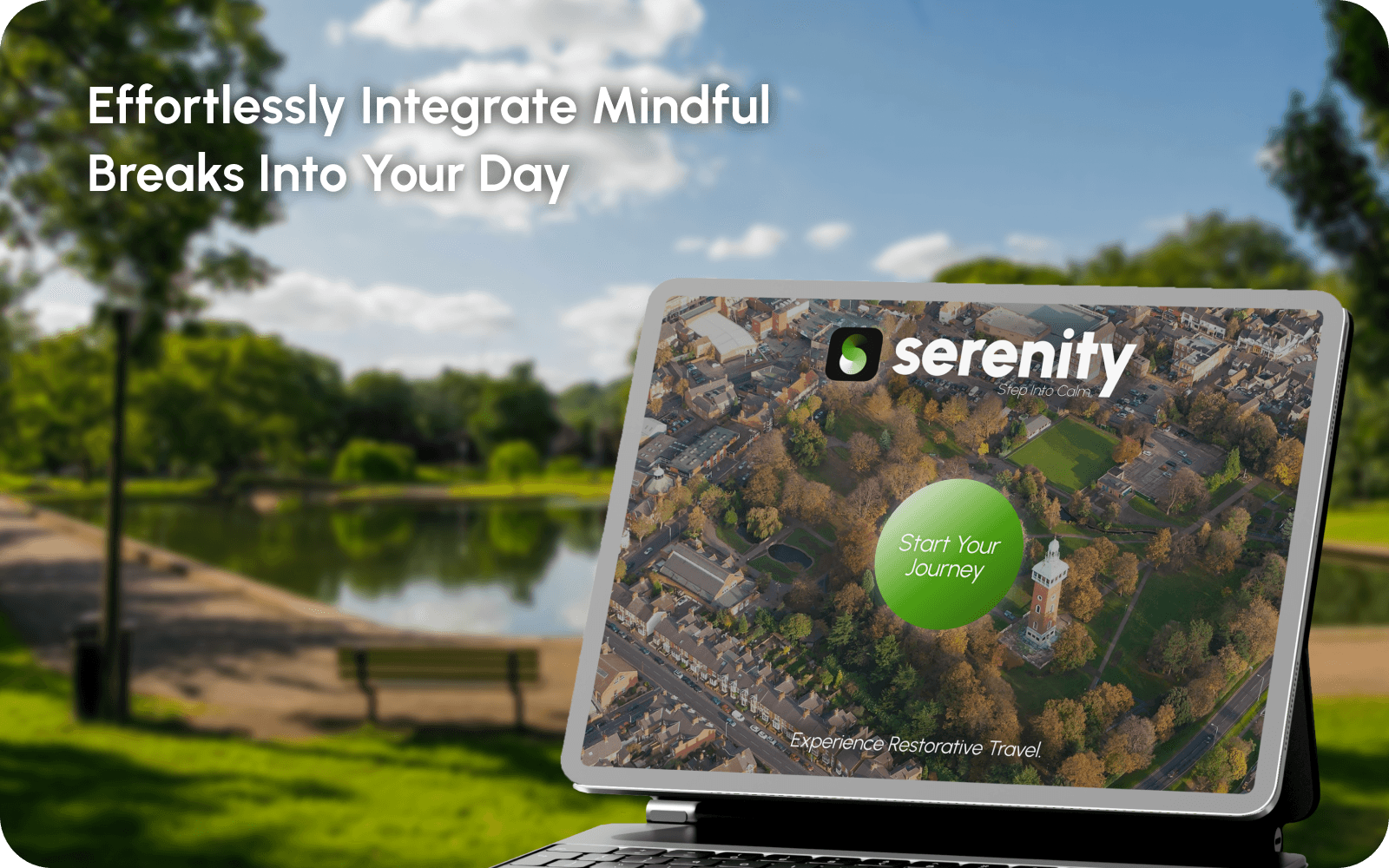
Serenity is a service designed to connect people with their neighbourhoods through curated local mini-adventures, effortlessly integrating moments of tranquility and engagement into their daily lives
Roles
Service Design
Timeline
6 Months
Tools
Figma, Miro, Gemini, Claude, Google VEO
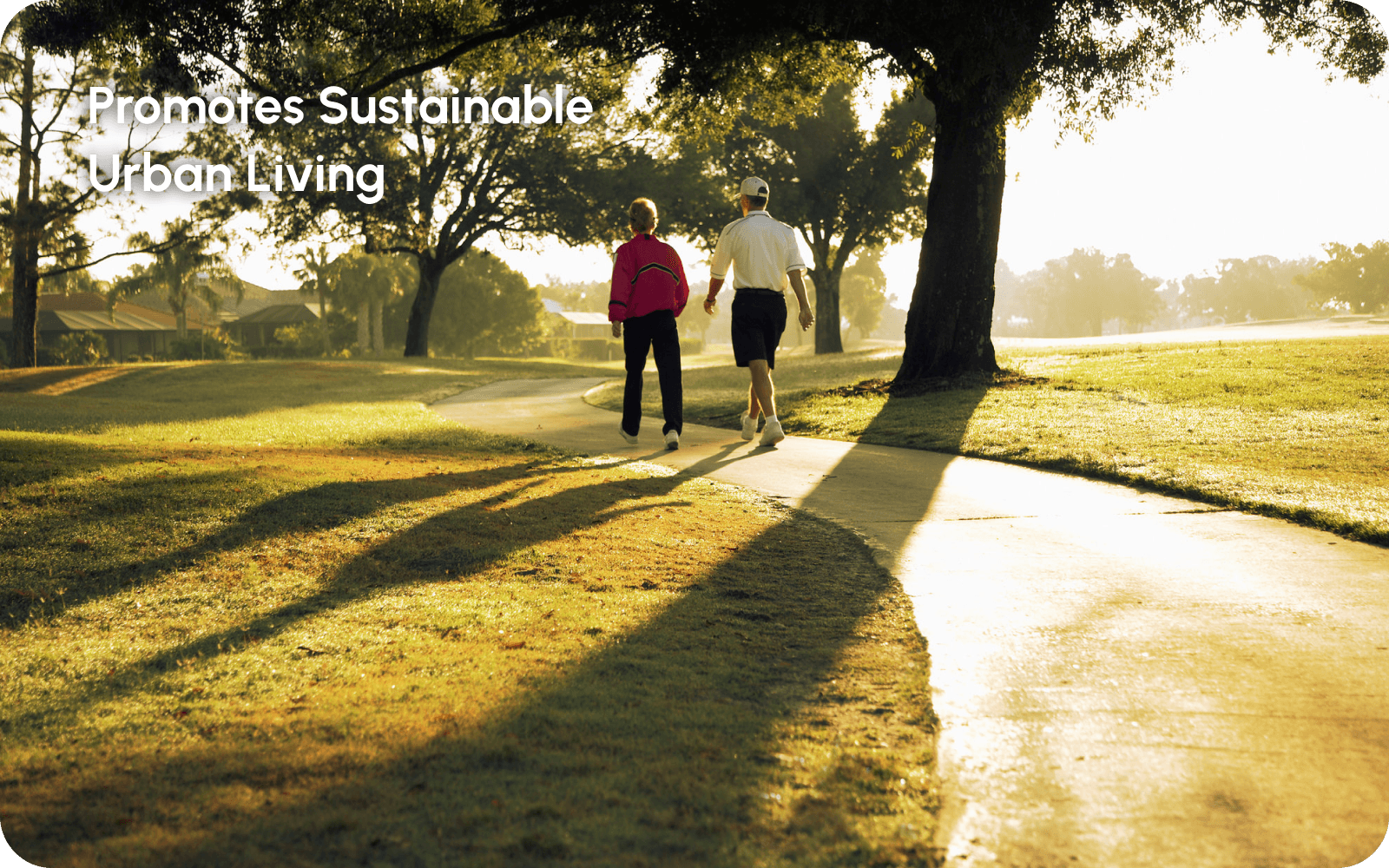
A brief overview
I began by understanding the core problem – burnout among urban professionals due to digital overload and high work stress. This involved analysing existing services' pain points, which overlooked quality travel and peaceful experiences
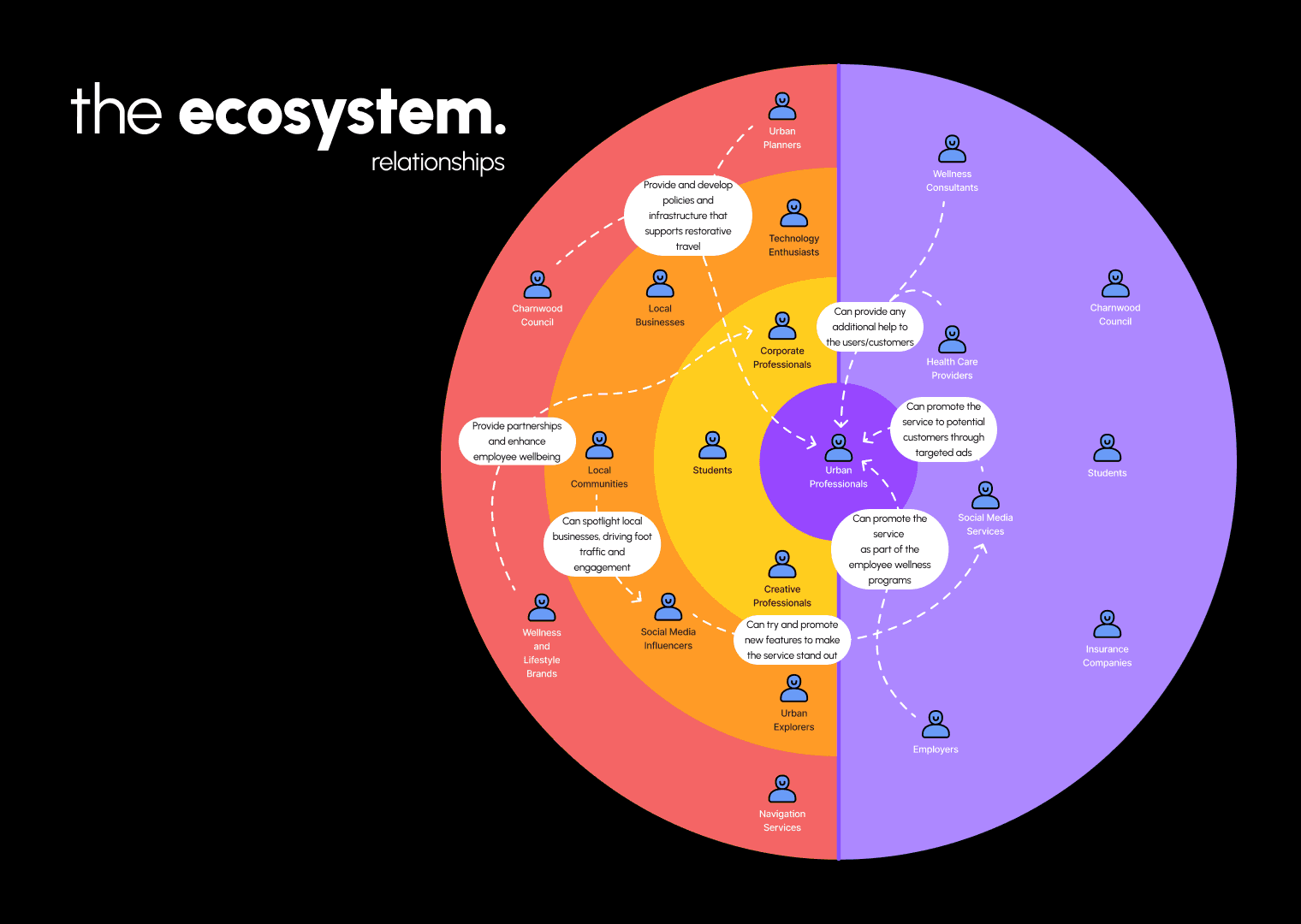
I utilised tools like an Ecosystem Map to identify and connect different stakeholders involved in urban well-being and local exploration. I also leveraged a Gigamap to understand the broader, complex system Serenity would operate within, revealing interconnected factors
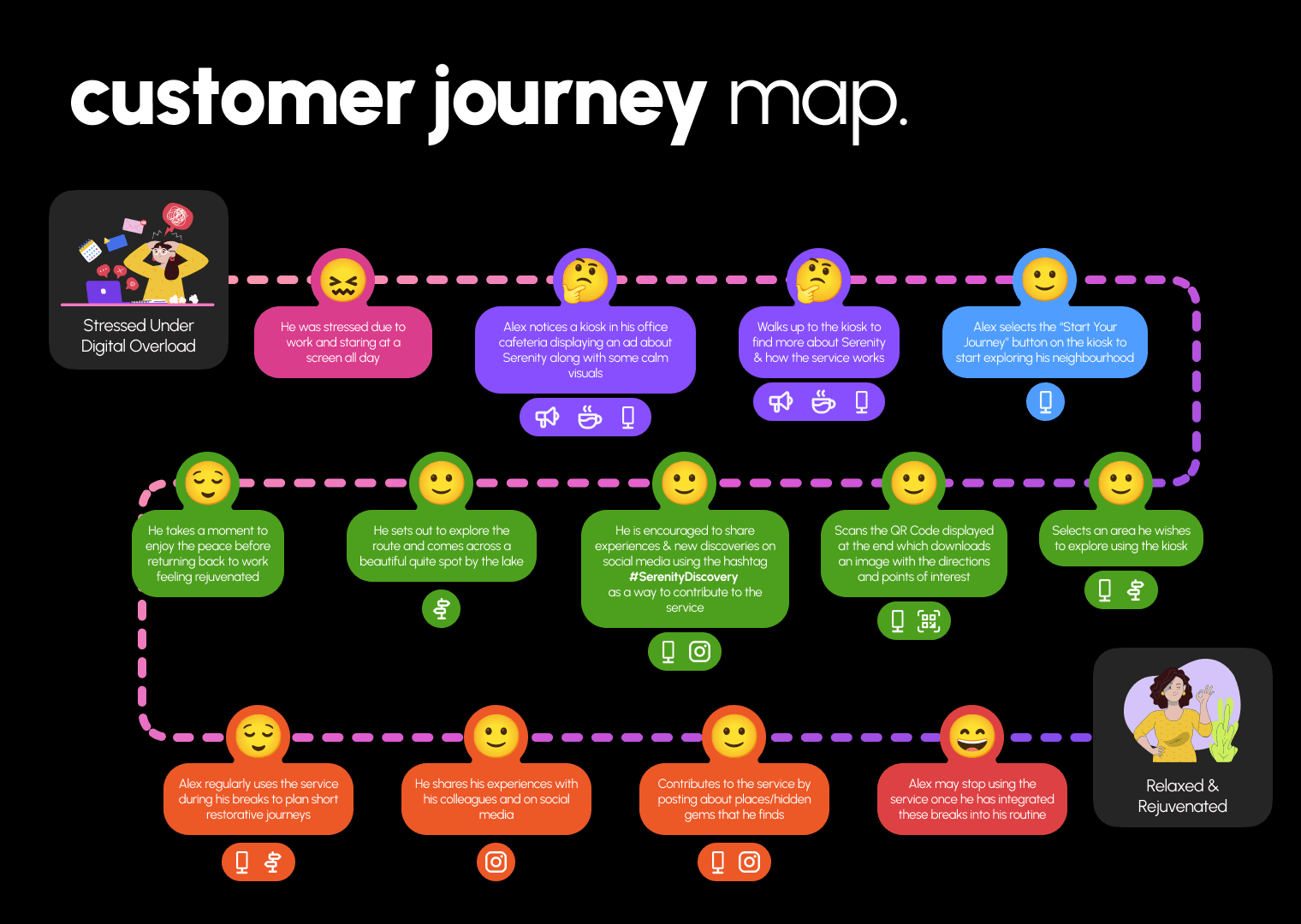
A Customer Journey Map was crucial for visualising the user's current experience, revealing pain points and identifying opportunities for Serenity to intervene effectively
I developed user personas, such as the "Wildcard," to empathise with specific user needs, like the desire for local exploration breaks to combat boredom and stress from working at home
Feedback from faculty and peers was instrumental in shifting Serenity's focus from merely a mobile app to a comprehensive service offering
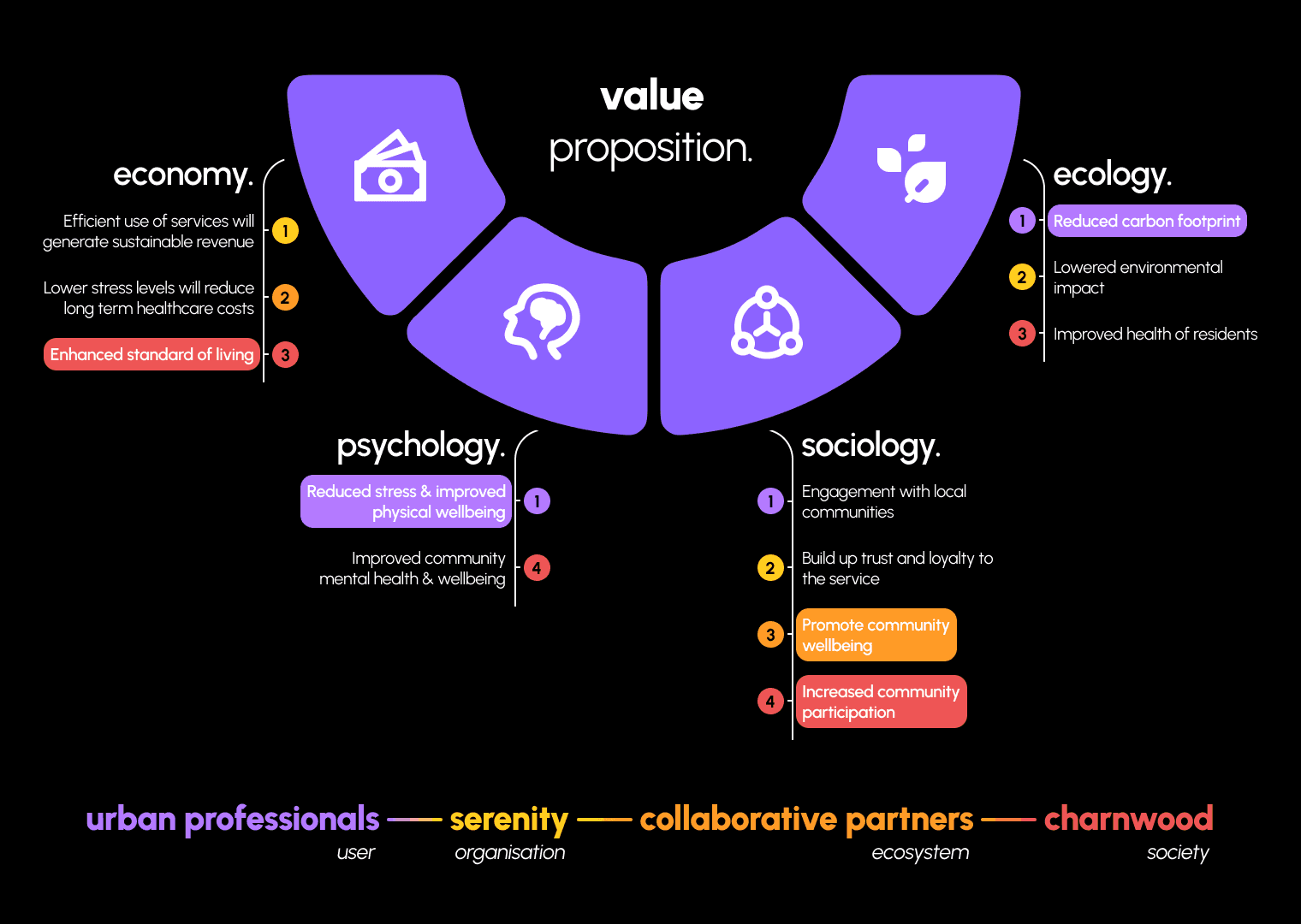
I brainstormed and refined key features and benefits, translating them into clear titles and descriptions that highlight how Serenity would help users destress
I created a Storyboard to explain how Serenity would assist users in destressing themselves, visually demonstrating its effectiveness in their journey
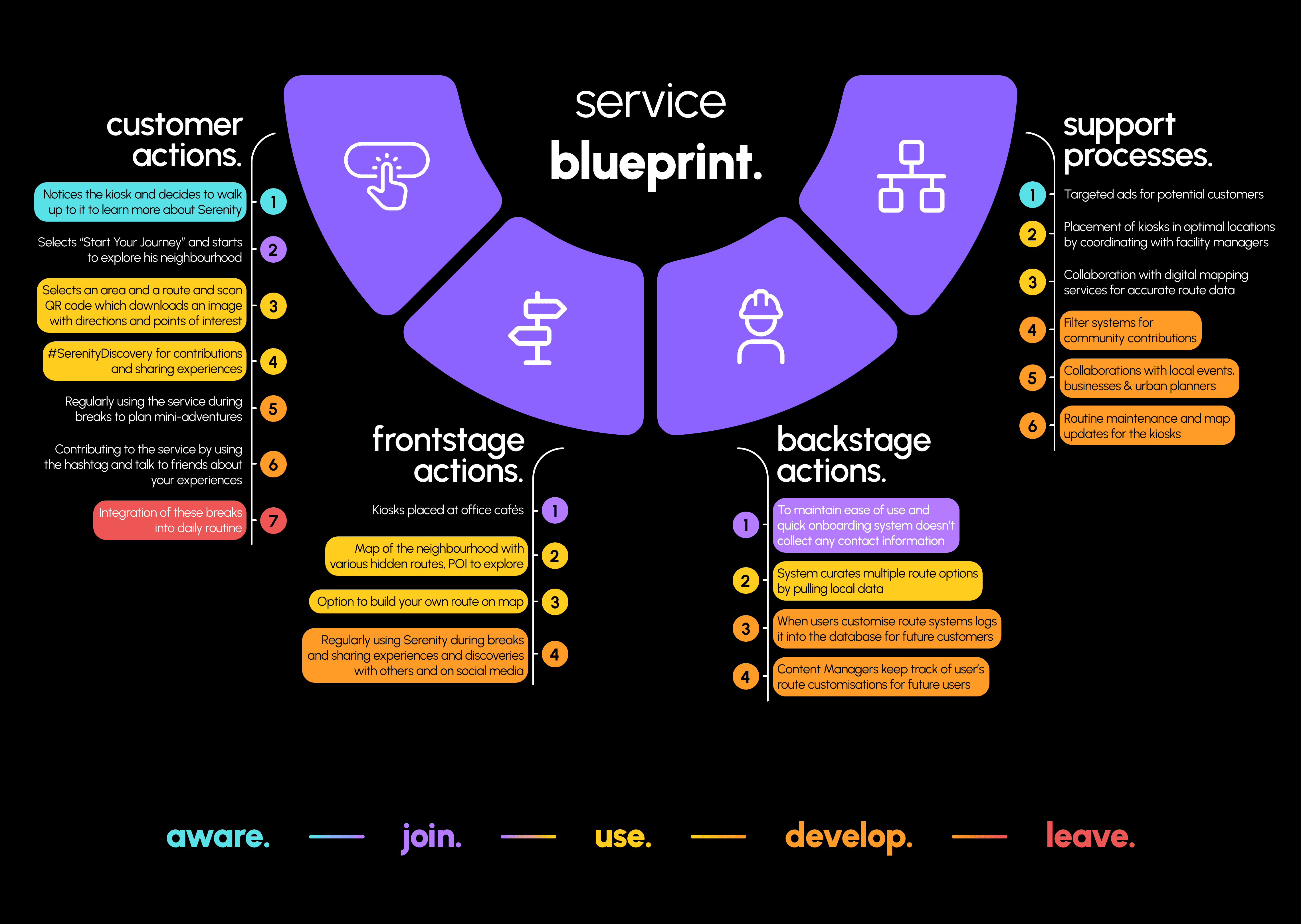
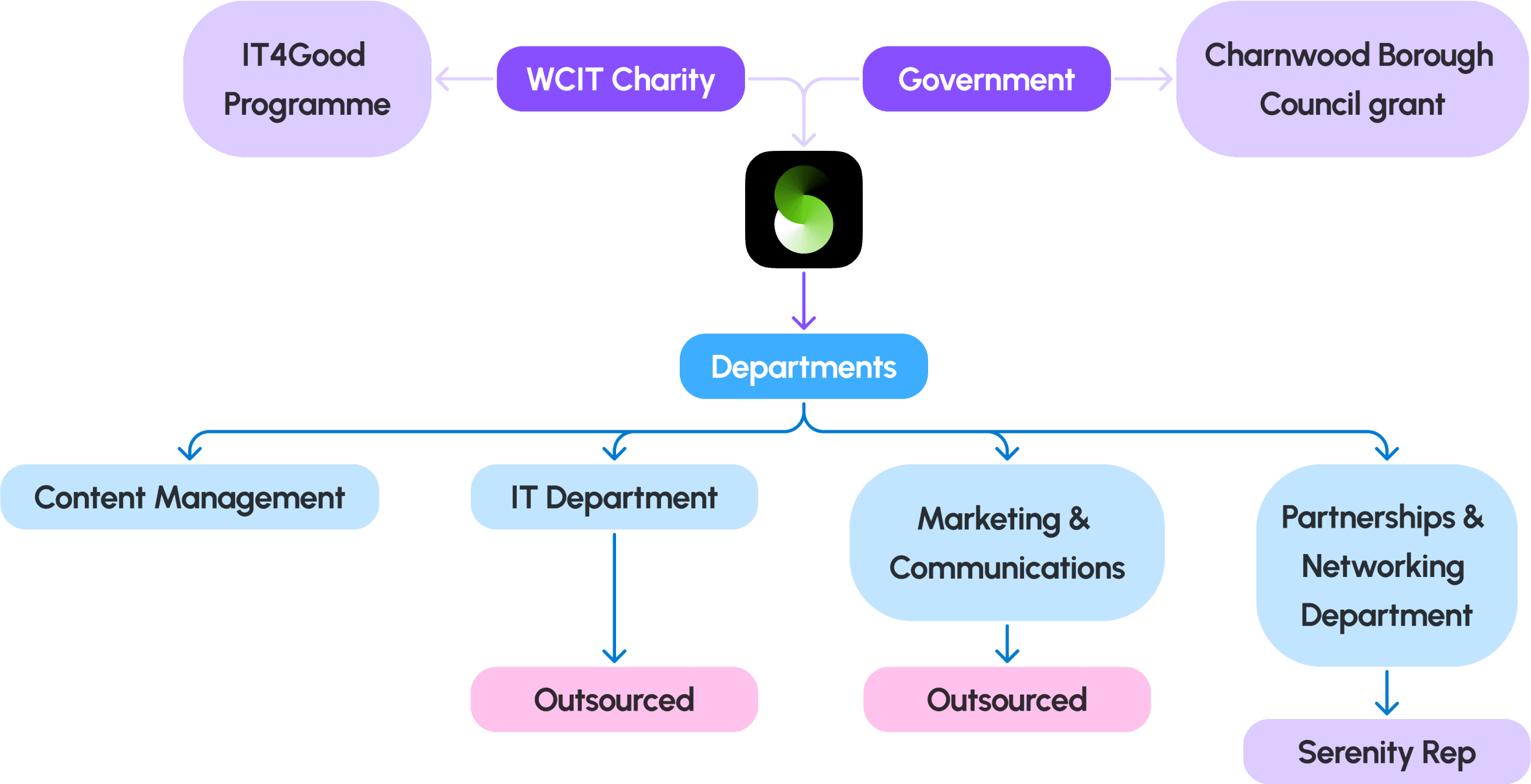
I developed a Service Blueprint to comprehensively map out the entire service delivery process, detailing user actions, front-stage interactions, back-stage processes, and supporting systems. This helped visualize the holistic user experience and operational requirements
" width="575px"><path d="M 26.744 107.191 C 11.974 107.191 0 94.221 0 78.221 L 0 28.971 C 0 12.971 11.974 0 26.744 0 L 548.256 0 C 563.026 0 575 12.971 575 28.971 L 575 78.221 C 575 94.221 563.026 107.191 548.256 107.191 Z" fill="rgb(240, 238, 232)" height="107.19117773253355px" id="dznaojDlx" width="575px"/><path d="M 26.744 107.191 C 11.974 107.191 0 94.221 0 78.221 L 0 28.971 C 0 12.971 11.974 0 26.744 0 L 548.256 0 C 563.026 0 575 12.971 575 28.971 L 575 78.221 C 575 94.221 563.026 107.191 548.256 107.191 Z" fill="rgb(240, 238, 232)" height="107.19117770605794px" id="F2qh8sO6m" transform="translate(0 483.809)" width="575px"/><path d="M 0 0 L 433.202 0 L 433.202 376.698 L 0 376.698 Z" fill="rgb(225, 224, 214)" height="376.69767441860466px" id="TXJZ7BNru" transform="translate(70.174 107.151)" width="433.2023255813953px"/><path d="M 0 0 L 359.188 0 L 0 93.079 Z" fill="rgb(195, 194, 186)" height="93.07909767441848px" id="ttSJN9Nxc" transform="translate(70.174 107.151)" width="359.188476744186px"/><path d="M 218.774 36.221 L 218.774 268.035 M 108.663 0 L 108.663 304.256 M 0 36.221 L 0 268.035" fill="transparent" height="304.2558139534885px" id="taFOOx0r4" stroke-dasharray="" stroke-linecap="round" stroke-linejoin="miter" stroke-miterlimit="10" stroke-width="11.93" stroke="rgb(0, 0, 0)" transform="translate(178.837 143.372)" width="218.7744140625px"/></g></svg>)
Bringing Serenity to Life
" width="144px"><path d="M 72 144 C 32.235 144 0 111.765 0 72 L 0 72 C 0 32.235 32.235 0 72 0 L 72 0 C 111.765 0 144 32.235 144 72 L 144 72 C 144 111.765 111.765 144 72 144 Z" fill="rgb(245, 245, 247)" height="144px" id="Aozwdeu0m" width="144px"/><path d="M 33.81 71.347 C 33.13 67.321 31.335 62.983 28.425 58.338 C 25.514 53.633 21.366 49.267 15.98 45.241 C 10.649 41.216 5.325 38.645 0 37.53 L 0 33.627 C 5.434 32.31 10.57 29.978 15.137 26.752 C 19.936 23.44 24.093 19.284 27.405 14.484 C 30.743 9.588 32.886 4.76 33.81 0 L 37.714 0 C 38.355 3.334 39.482 6.555 41.059 9.561 C 42.732 12.784 44.867 15.885 47.465 18.857 C 50.131 21.767 53.109 24.399 56.387 26.745 C 61.283 30.213 66.267 32.512 71.347 33.627 L 71.347 37.53 C 67.94 38.21 64.411 39.604 60.753 41.705 C 57.137 43.83 53.773 46.356 50.722 49.233 C 47.621 52.082 45.078 55.081 43.106 58.243 C 40.189 62.888 38.394 67.253 37.714 71.347 Z" fill="rgb(65, 67, 72)" height="71.34718549301026px" id="dzJOWBEyn" transform="translate(34.001 37.401)" width="71.34718549301161px"/></g></svg>)
How Serenity Works